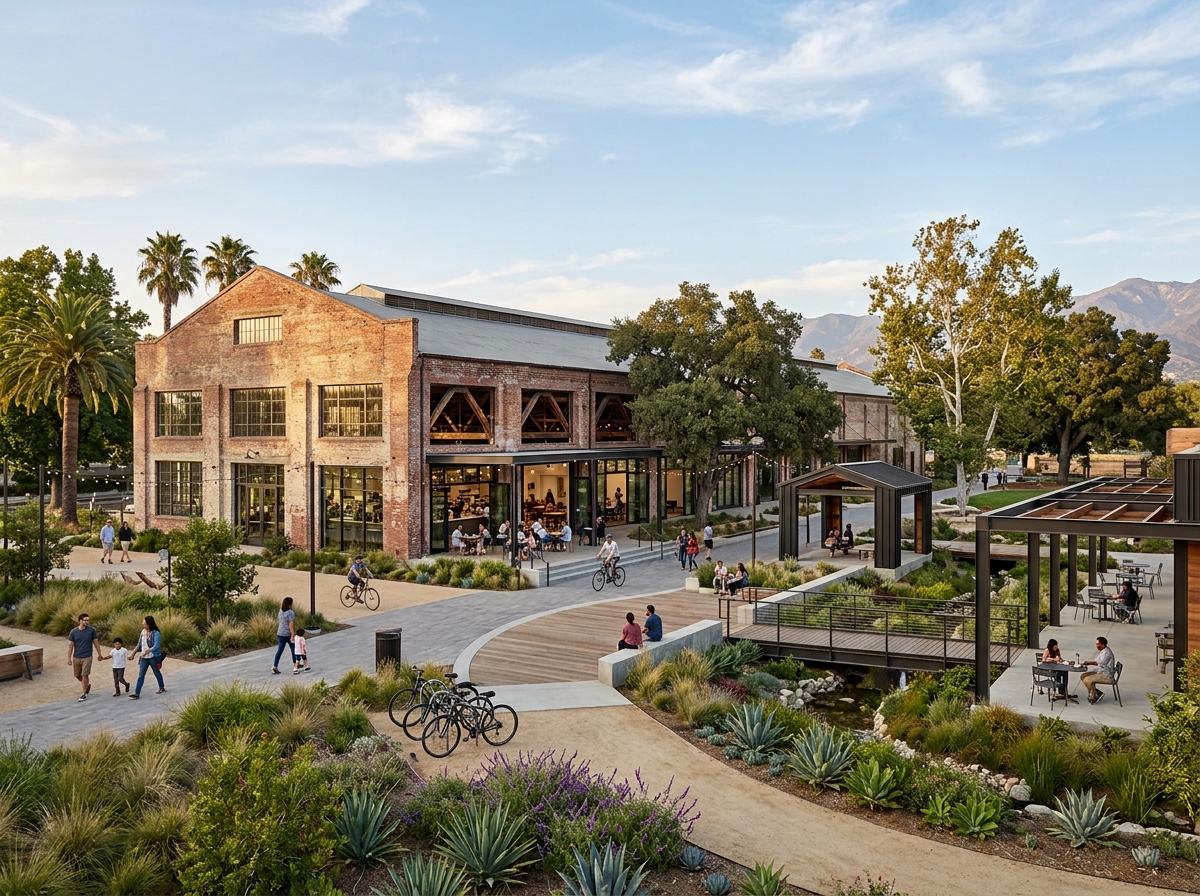
Covina’s landscape has changed dramatically since citrus orchards and packing facilities played a major role in the local economy. One of the clearest examples of that transition can now be seen along North Citrus Avenue, where a property associated with Covina’s citrus-processing past is being transformed into the Covina Recreation Village.
Located at 640-680 N. Citrus Avenue near the Covina Metrolink Station, the project represents more than the construction of a new community facility. It connects an important part of Covina’s agricultural history with the way residents may use the area in the decades ahead.
According to the City of Covina, the approximately 2.49-acre property was formerly home to a citrus packinghouse facility. The site is being adaptively redeveloped to include recreation, community gathering areas, and library space, with the City currently expecting the Recreation Village to open to the public in late 2026.
Why Citrus Matters to Covina’s History
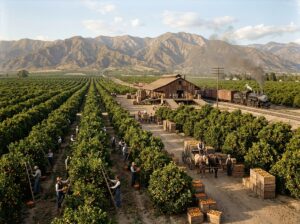
To understand why the site is significant, it helps to look back at Covina’s agricultural beginnings. Citrus was not immediately the dominant crop in the area. Historical research published by the City indicates that early settlers experimented with wheat, deciduous fruit, truck farming, and other crops before oranges and other citrus varieties became increasingly important during the late nineteenth century.
The first citrus plantings in Covina date to the 1880s, while widespread planting accelerated during the 1890s. Thousands of acres eventually supported citrus production, helping transform Covina and surrounding areas into an important agricultural district.
Rail transportation was equally important. Southern Pacific service reached Covina in 1895, giving growers and businesses improved access to markets beyond the San Gabriel Valley. Packinghouses developed near the railroad tracks so locally grown fruit could be sorted, packed, and shipped efficiently.
The City’s historical research notes that at one point at least six packinghouses operated near the railroad corridor. Citrus became closely connected with Covina’s economy and identity during the early twentieth century.
Residents interested in the broader story can also explore the City of Covina’s local history resources, which include information about museums, historical photographs, and walking tours.
A Site Connected to Covina’s Working Past
The property being transformed into the Recreation Village sits in an area where agriculture, industry, and transportation historically intersected. The railroad corridor allowed packing and processing businesses to operate close to the transportation network that moved agricultural products throughout Southern California and beyond.
In later years, the property was associated with Vita-Pakt and fruit-processing operations. City documents describing the Recreation Village refer to the property as former Vita-Pakt facilities and identify its previous use in connection with citrus packing or processing.
That distinction is important when discussing the site’s history. The Recreation Village should not automatically be described as the preservation of an untouched nineteenth-century packinghouse. The property changed over time, and parts of the existing structures have required substantial alteration or demolition because of development needs and structural conditions.
What remains especially significant is the continuity of land use. A property once devoted to processing products from Covina’s agricultural economy is now being reconsidered as a place for recreation, learning, gathering, and public activity.
Adaptive Reuse Gives Old Sites New Purposes
Adaptive reuse generally involves giving an existing property or building a new purpose rather than treating redevelopment as a completely separate chapter. In Covina, this idea is especially relevant because many properties near downtown reflect different stages of the city’s growth.
The Recreation Village offers an opportunity to retain a connection to that history while meeting contemporary community needs. It demonstrates how a place associated with agriculture and industry can continue to play an active role even after the economic activity that originally shaped it has changed.
What Is Planned for the Recreation Village?
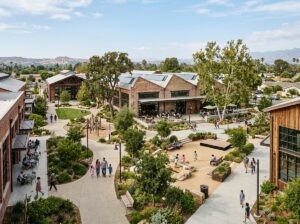
The Covina Recreation Village is being developed as a multi-use public destination. Current City information describes plans for an indoor gymnasium, community plaza, library center, playground areas, pathways, seating areas, a dog park, and other recreational features.
The gymnasium is planned to accommodate activities such as basketball and volleyball, while an indoor rock-climbing wall adds a type of recreational facility that has not previously been available through the City’s park system.
The project also includes outdoor gathering areas intended to make the property more than an indoor recreation center. Paths, play areas, seating, landscaping, and public spaces are intended to connect different parts of the site.
Development has been divided into phases. Official City documents show that construction of the first phase began in 2024, with additional components continuing through the following stages. As with any active public construction project, schedules and individual features may change, so readers should consult current City project information for the latest status.
The Railroad Connection Still Matters
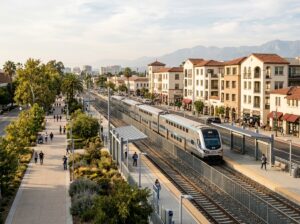
One of the most interesting elements of the project is its location beside the railroad corridor. More than a century ago, proximity to rail service helped make citrus packing and agricultural shipping practical. Today, the nearby Covina Metrolink Station gives the same general area a different transportation role.
The relationship between the Recreation Village, downtown, and the station has also prompted discussion about pedestrian connections. The City is currently studying the feasibility of a pedestrian bridge that could cross the existing rail line and create another connection between Front Street, the Metrolink station, and the Recreation Village.
The bridge remains a proposal under study rather than a completed or guaranteed project. Current information from the City’s Community Development Department identifies it as being in the feasibility phase.
This creates an interesting historical parallel. Transportation helped determine where agricultural businesses developed in Covina more than a century ago, and transportation continues to influence how the same part of the city is planned today.
Preserving History Does Not Always Mean Freezing It
Historic preservation is often associated with restoring a building to a particular period. But local history can also be preserved by documenting how a site changes, explaining what happened there, and maintaining a connection between earlier uses and new ones.
The Recreation Village provides a useful example. Covina is no longer surrounded by the extensive citrus groves that once shaped the local economy. Many former agricultural properties have been converted to housing, businesses, roads, civic facilities, and other urban uses as the San Gabriel Valley developed.
Remembering those earlier uses helps residents understand why particular streets, railroad corridors, industrial properties, and neighborhoods developed where they did.
The Covina Valley Historical Society preserves photographs, documents, citrus records, artifacts, and other materials connected with that earlier period. Resources such as these make it possible to compare contemporary redevelopment with the community that existed before suburban growth dramatically changed the landscape.
A New Chapter for an Old Covina Site
The transformation of the North Citrus Avenue property illustrates a broader pattern visible throughout Covina. Places created for one economic purpose can acquire entirely different roles as the city changes.
For decades, citrus agriculture helped define Covina. Packing and processing facilities supported an economy dependent on orchards, transportation, labor, and regional markets. As agriculture declined and residential development expanded after World War II, many of those properties were gradually absorbed into a growing suburban city.
The Covina Recreation Village brings that story into the present. Instead of shipping agricultural products from a site near the railroad, the property is being developed as a destination where residents may exercise, gather, use library resources, play, and spend time outdoors.
That does not erase its earlier history. Instead, it adds another chapter to it.
Following the evolution of places like this is one of the most useful ways to understand Covina history. Buildings can change, industries can disappear, and neighborhoods can take on new purposes, but the stories attached to the land remain part of the community’s historical record.