Covina has never been a city that stayed exactly the same. What began as a small agricultural community in the late nineteenth century developed around citrus production, rail transportation, local commerce, and eventually suburban growth. Today, another period of change is underway as new housing, businesses, public facilities, transportation improvements, and mixed-use projects reshape parts of the city.
Growth does not automatically require Covina to lose the places that connect residents with earlier generations. Historic preservation and development can work together when older buildings, traditional street patterns, architectural character, and documented historic resources are considered as part of the planning process.
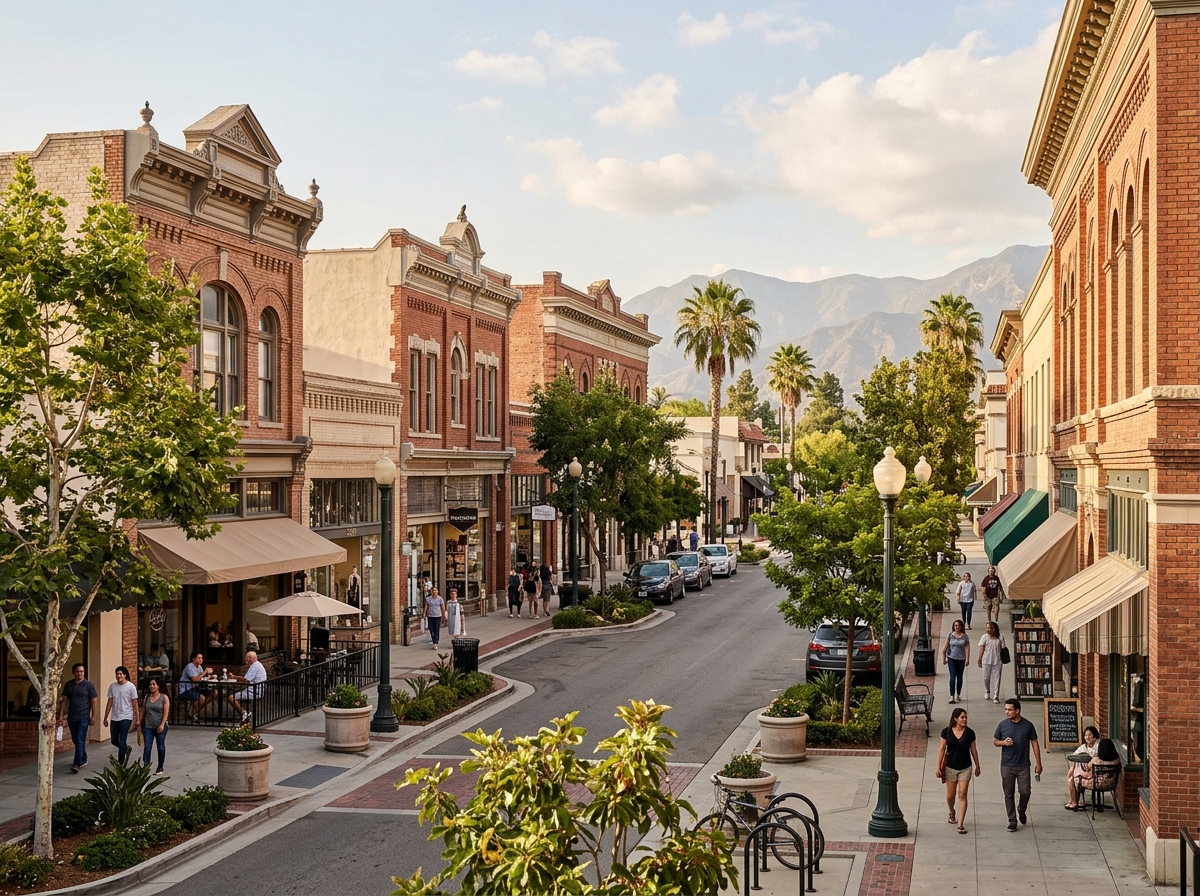
This balance is particularly visible around Downtown Covina and the Citrus Avenue District. The City of Covina identifies the Citrus Avenue District as its historic central core and notes that several buildings there date to the early 1900s. At the same time, the district remains an active commercial and transportation center rather than a museum preserved exactly as it appeared a century ago.
Why Historic Preservation Matters in Covina
Historic buildings provide more than an attractive background. They help reveal how a community developed, what kinds of businesses once operated there, how residents moved through the city, and which architectural styles were common during different periods.
Covina’s history includes citrus agriculture, rail-oriented industry, early civic development, postwar suburban expansion, and the growth of modern commercial corridors. Evidence of those periods can still be found in buildings, street layouts, public spaces, photographs, and archival records.
The City’s local history resources explain that special attention has been given to maintaining Downtown Covina’s old-town character while encouraging pedestrian and transit-oriented development.
Preservation can therefore serve two purposes. It protects physical reminders of the past while also helping Downtown Covina maintain an identity different from newer shopping and development areas elsewhere in Southern California.
Covina Is Still Growing and Changing
Preservation discussions are especially relevant because development continues throughout Covina. The City’s current Major Projects Summary tracks proposals from initial review through approval and completion.
As of 2026, the list includes residential, commercial, restaurant, mixed-use, hospitality, and other projects at locations throughout the city. Several approved projects are on or near Citrus Avenue, while other proposals involve major corridors such as Azusa Avenue, Barranca Avenue, and San Bernardino Road.
This activity reflects a basic reality of local history: cities continue evolving. Buildings that seem permanent may receive new uses. Former commercial or industrial properties can become housing or community facilities. Streets designed primarily for automobiles may later be redesigned to accommodate walking, cycling, or transit connections.
The goal of preservation is not necessarily to prevent these changes. Instead, preservation can help communities understand what should be documented, retained, adapted, or carefully integrated as development occurs.
Not Every Old Building Has Historic Status
It is important to distinguish between an older property and an officially recognized historic resource. Age alone does not automatically make a building historically significant or legally protected.
The City’s Planning Division provides access to the Covina Town Center Historic Resource Survey, prepared in 2007. Historic surveys help identify buildings and areas that may have architectural or cultural significance and provide documentation useful for future planning.
Resources such as these are valuable because development discussions can be based on research rather than assumptions about a property’s history.
Downtown Shows How Old and New Can Mix
Downtown Covina provides perhaps the clearest example of preservation and change existing together. Citrus Avenue still contains a compact commercial environment with older storefronts and pedestrian-oriented blocks, but the uses inside those buildings have changed repeatedly.
Restaurants, entertainment venues, shops, professional businesses, and other contemporary uses can occupy older spaces without eliminating the basic form of the historic streetscape. This type of continued use can give older buildings an economic purpose while retaining visual connections to the city’s past.
The Covina Town Center Specific Plan reflects this approach. It establishes a long-term strategy for revitalization, transit-oriented development, business activity, housing, public improvements, and a more walkable Town Center while recognizing the historic character of Downtown Covina.
Adaptive Reuse Can Connect Different Eras
One way development and history can intersect is through adaptive reuse. Instead of requiring every property to continue serving its original purpose, adaptive reuse gives an older site or structure a new function.
This approach is particularly relevant in a city whose economy has changed dramatically. Buildings and properties once associated with agriculture, citrus processing, transportation, or older forms of retail may no longer be practical for their original uses.
A contemporary example is the Covina Recreation Village on North Citrus Avenue. The property has connections to Covina’s citrus-processing past and is being transformed into a public recreation and community destination. The project demonstrates how land associated with an earlier economic period can acquire a completely different role while its history remains worth documenting.
Adaptive reuse does not mean that every historic feature will necessarily remain intact. Structural conditions, building codes, accessibility, safety requirements, project design, and practical needs can all affect what is retained. Accurate local-history coverage should document both what survives and what changes.
Walkability Can Reinforce Historic Character
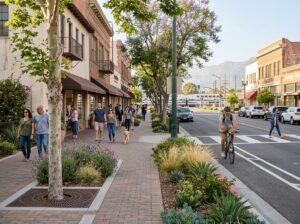
Historic downtowns were often developed before automobile-oriented planning became dominant. Buildings were closer together, storefronts opened directly toward sidewalks, and many everyday destinations were within walking distance.
That makes modern interest in walkability especially relevant to preservation. Improving pedestrian connections does not simply address transportation. It can also reinforce the way a traditional downtown was originally experienced.
Covina’s Active Streets and Multi-Modal Connectivity Plan considers walking, bicycling, transit access, first-and-last-mile connections, economic development, and urban design together.
Near Downtown Covina, the relationship between Citrus Avenue and the Metrolink station is particularly important. The City is also studying a possible pedestrian bridge connecting areas around Front Street, the station, and the Recreation Village. That bridge remains in the feasibility stage and should not be treated as a guaranteed future project.
Preservation Requires Documentation Too
Saving a building is only one form of preservation. Communities can also preserve history by documenting places before they change.
Historic photographs, property records, maps, oral histories, planning documents, architectural surveys, newspapers, and family collections can help future residents understand buildings and landscapes that may eventually look very different.
This is particularly valuable when redevelopment affects places that are historically important even if every structure cannot be retained. Good documentation can record architectural details, former businesses, earlier land uses, and the people connected with a property.
It can also prevent oversimplification. Covina’s history includes more than its best-known buildings. Industrial properties, modest commercial buildings, transportation corridors, agricultural sites, neighborhoods, and ordinary community spaces can all contribute to understanding how the city developed.
Growth Becomes Part of History
There is no single point at which Covina’s history ends and modern development begins. The city’s early citrus boom was once new development. Railroads changed earlier patterns of transportation. Postwar housing replaced agricultural land. Commercial districts evolved as residents’ needs changed.
Projects being planned and built today will eventually become part of the same timeline.
The challenge is to make change thoughtful enough that future generations can still understand what came before. That may involve retaining significant buildings, reusing older structures, protecting traditional streetscapes, documenting properties before redevelopment, or designing new construction that respects its surroundings.
Historic preservation and growth do not have to represent opposing sides of Covina’s future. When planning recognizes both community needs and local history, the result can be a city that continues evolving without becoming disconnected from its past.
Covina History will continue following these changes and documenting the places, buildings, projects, and historical records that show how yesterday’s Covina is influencing the city being built today.