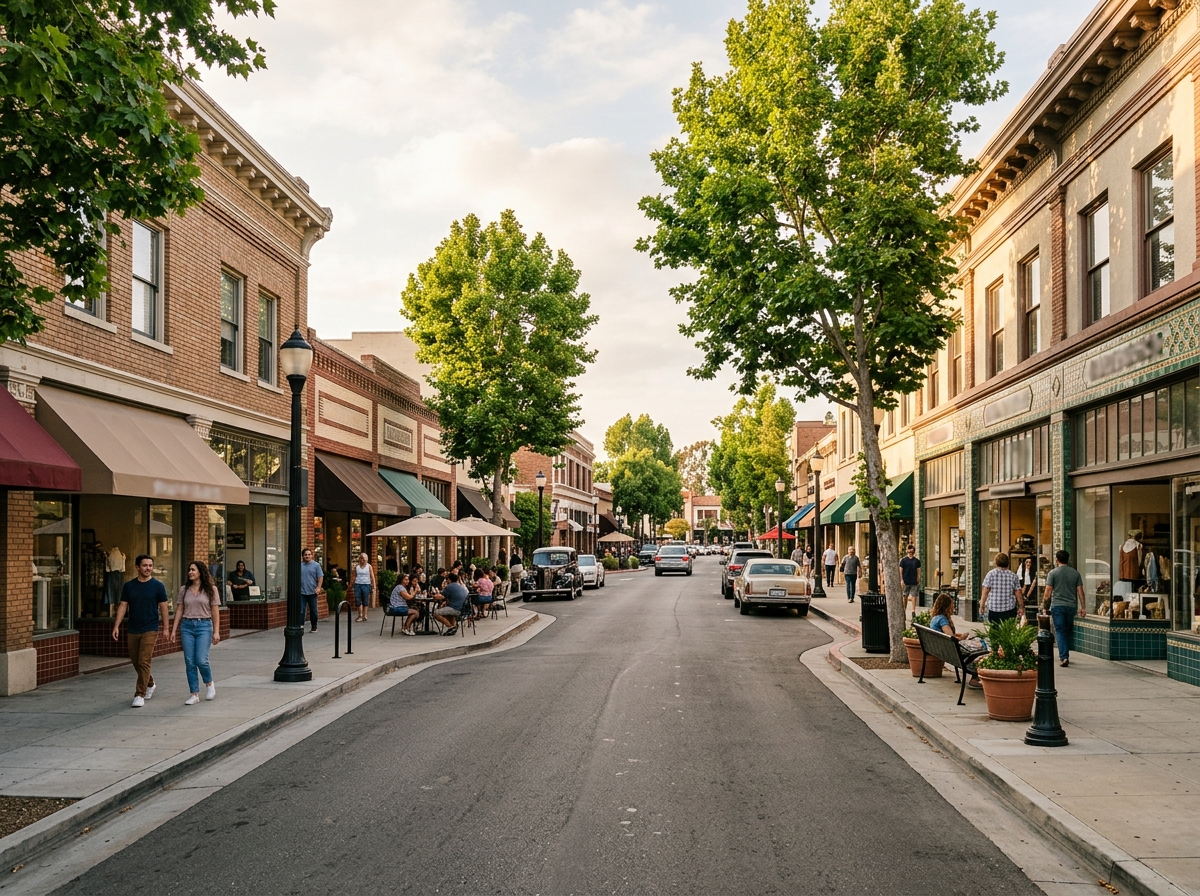
Historic Citrus Avenue remains one of the most recognizable parts of Covina. Its storefronts, pedestrian-scale blocks, civic buildings, restaurants, gathering places, and nearby transportation connections help give downtown an identity that feels different from newer commercial areas across the San Gabriel Valley.
At the same time, downtown Covina is not frozen in the past. New businesses, development proposals, transportation improvements, public investments, and changing uses continue to reshape the area. The challenge is finding a balance between encouraging that activity and retaining the character that makes Citrus Avenue historically important.
The City of Covina describes the Citrus Avenue District as the historic and central core of downtown, noting that several buildings in the area date to the early 1900s. That history now exists alongside a broader effort to make downtown more walkable, connected, economically active, and accessible to transit.
Why Citrus Avenue Matters to Downtown Covina
Citrus Avenue has been closely connected with Covina’s development for generations. Downtown grew as the surrounding community changed from an agricultural settlement into a commercial center and, eventually, a suburban city.
Covina’s early economy became strongly associated with citrus agriculture. Packinghouses, growers, merchants, transportation companies, and local businesses helped support a community surrounded by orange and grapefruit groves. As the town developed, Citrus Avenue emerged as an important commercial corridor where residents could shop, conduct business, gather, and participate in community life.
The physical setting also helped define downtown. Smaller storefronts positioned close to sidewalks created a different experience from automobile-oriented shopping centers that appeared later in the twentieth century. That compact pattern remains one of the qualities that gives the district its traditional downtown feel.
The City’s official history resources note that special attention has been given to maintaining Covina’s old-town downtown character while supporting pedestrian and transit-oriented development.
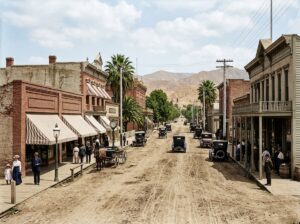
Planning for Change Without Erasing the Past
Preserving a historic downtown does not necessarily mean preventing new development. Successful historic commercial districts often continue to change while protecting the features that make the area recognizable.
Covina’s approach is outlined in the Covina Town Center Specific Plan. The plan seeks to revitalize the city core, improve connections with the Metrolink station, encourage investment, and create a more accessible Town Center while building on the history already present downtown.
The planning framework is important because development can affect more than individual properties. Building height, setbacks, storefront design, parking, sidewalks, landscaping, and the relationship between buildings and streets all influence how a historic district feels.
Historic Character Is More Than One Building
When people think of preservation, they may picture a single landmark protected from demolition. Downtown character is broader than that. It can include the rhythm of storefronts along a block, architectural details, older civic buildings, narrow pedestrian-oriented spaces, alleys, landscaping, and the way businesses interact with the sidewalk.
Maintaining these qualities allows new uses to enter downtown without making the district feel disconnected from its past. A restaurant, shop, residence, or community space can be contemporary while still fitting within a historic commercial setting.
New Activity Is Already Reaching Citrus Avenue
Current City development records show that Citrus Avenue continues to attract new projects and changing commercial uses. The City’s Major Projects Summary lists approved projects at locations including 230 N. Citrus Avenue and 125 S. Citrus Avenue.
Individual businesses may change over time, but the larger trend is significant. Historic downtown buildings must continue serving useful purposes if the district is going to remain economically active. Restaurants, entertainment, retail, offices, community activities, and other appropriate uses can bring people into older commercial spaces rather than leaving them vacant.
This kind of reuse can also help preserve buildings indirectly. A property that remains useful and maintained has a better chance of continuing as part of the streetscape than one that no longer has a practical role.
For historians, these changes are worth documenting. Today’s renovation or new tenant eventually becomes part of tomorrow’s historical record.
Walkability Is Becoming Part of the Story
Transportation has always influenced downtown Covina. Rail connections once helped agricultural producers reach outside markets, while later automobile growth reshaped how residents traveled throughout the region. Today, planners are again focusing on the relationship between downtown and rail transportation.
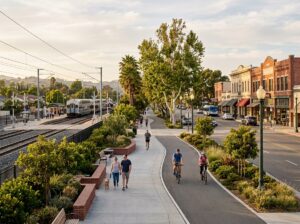
The Covina Metrolink Station sits just north of the traditional downtown core. Improving the connection between the station, Citrus Avenue, nearby neighborhoods, and public destinations is a recurring theme in local planning.
The City’s Active Streets and Multi-Modal Connectivity Plan looks at walking, bicycling, first-and-last-mile travel, economic development, and urban design together. The goal is not simply to move vehicles through Covina but to improve the ways people reach destinations by different forms of transportation.
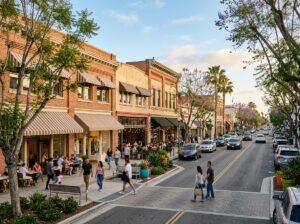
For a historic downtown, walkability can reinforce traditional design. Older commercial streets were generally built around shorter distances between destinations and direct access from sidewalks. Making it easier to walk through the district can therefore support both modern transportation goals and historic urban patterns.
A Proposed Connection Near the Rail Line
One current idea illustrates this changing relationship between downtown and transportation. Covina is studying the feasibility of a pedestrian bridge that could cross the rail line near Front Street and provide another connection between downtown, the Metrolink station, and the Covina Recreation Village.
The City’s pedestrian bridge project page makes clear that the concept remains in the feasibility phase. It should therefore be viewed as a planning proposal rather than a completed or guaranteed improvement.
Whether or not the concept ultimately moves forward, the study shows how downtown planning increasingly considers connections beyond individual buildings.
Historic Resources Keep the Earlier Downtown Visible
Understanding change on Citrus Avenue is easier when residents can compare today’s streetscape with historical records. Covina has several resources that help preserve that connection.
The Covina Valley Historical Society maintains photographs, documents, citrus records, pioneer materials, and local artifacts. Its Firehouse Jail Museum is located just east of Citrus Avenue in Covina’s historic downtown district, although the Society currently lists the museum as temporarily closed for reconstruction.
Historical photographs are especially valuable because they show how individual buildings, storefronts, roads, transportation systems, and public spaces have changed. A property that appears ordinary today may have served a very different purpose decades earlier.
Walking through Citrus Avenue with that historical context changes how downtown can be understood. It becomes less of a collection of separate businesses and more of a continuing landscape shaped by many generations.
Preservation and Growth Can Share the Same Street
The future of historic Citrus Avenue will likely involve continued change. New businesses will arrive, existing buildings will be renovated, transportation patterns will evolve, and public improvements may alter how people move through downtown.
The important question is not whether change happens. Downtown Covina has been changing since its earliest years. The more useful question is whether new development respects the scale, history, architecture, and pedestrian qualities that distinguish the Citrus Avenue District from other commercial corridors.
Preservation can work alongside investment when older buildings remain useful, historic features are recognized, new construction responds to its surroundings, and public spaces continue encouraging people to experience downtown on foot.
That balance is what makes Citrus Avenue an especially interesting place to follow. It tells two stories at once – the story of historic Covina and the story of a city still evolving.
As projects move forward, Covina History will continue documenting the buildings, streets, public spaces, and local decisions that connect downtown’s past with its next chapter.