
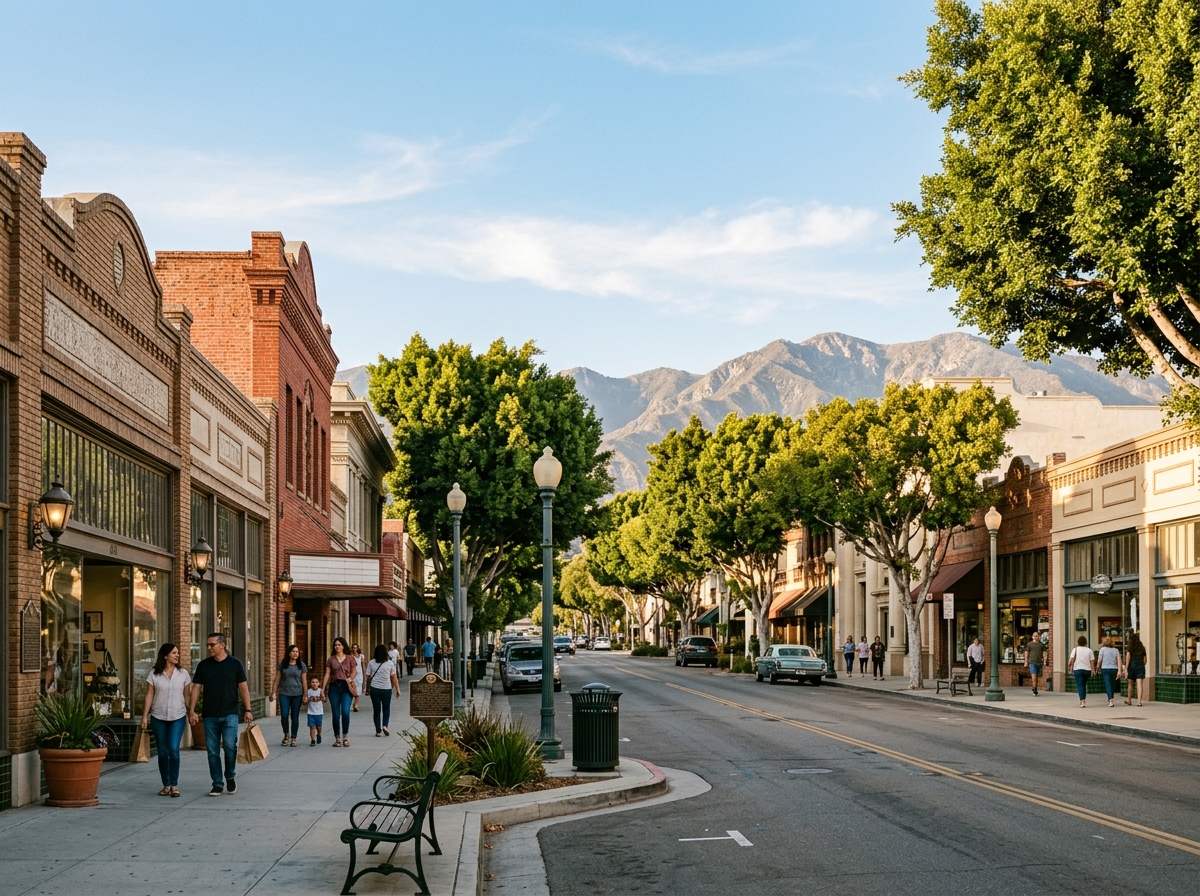
Downtown Covina has changed many times, but Citrus Avenue still gives the city a visible connection to its past. Today, the corridor mixes older commercial buildings, restaurants, civic destinations, public spaces, and access to regional transit. A century ago, the same part of Covina served a community whose economy and daily life were closely tied to agriculture, rail transportation, and a much smaller town center.
Looking at Downtown Covina then and now is useful because the story is not simply about old buildings being replaced by new ones. It is about how the purpose of the district has evolved while its traditional scale and identity remain important to local planning. The City of Covina describes the Citrus Avenue District as the historic and central core of downtown, with several buildings dating to the early 1900s.
Downtown Covina Began in an Agricultural Community
Covina was founded in 1882 in the East San Gabriel Valley. In its early decades, the surrounding landscape was far more rural than it is today. Farmers experimented with different crops, but citrus eventually became one of the defining parts of the local economy.
Orange and other citrus groves spread across the area, creating demand for packing, processing, transportation, equipment, labor, and local services. Downtown businesses served residents and growers while providing the commercial center a growing community needed.
The City’s history resources describe Covina’s early development and the continuing effort to preserve an old-town feeling in the downtown area. That history helps explain why Citrus Avenue developed differently from the broad automobile-oriented commercial corridors that appeared later.
The Railroad Reshaped Covina
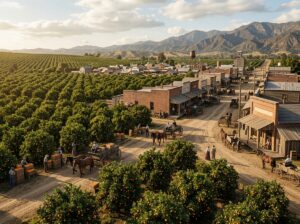
Transportation became one of the strongest forces shaping downtown and nearby industrial land. Southern Pacific rail service reached Covina in 1895. The City’s General Plan explains that the rail line was developed in the late nineteenth century in part to serve the flourishing citrus industry and support regional growth.
Packing warehouses were built near the tracks because proximity to rail made it easier to move agricultural products to larger markets. This relationship between citrus and transportation influenced where industrial and commercial activity developed.
The Covina General Plan also documents a later shift. As the region changed from agricultural to suburban after World War II, many rail-fronting properties once associated with citrus packing became industrial or manufacturing uses.
Then: A Downtown Serving a Smaller Town
Early downtown Covina was built for a different rhythm of daily life. Stores, civic uses, and services were concentrated close together. Buildings generally met the sidewalk more directly than later shopping centers surrounded by large parking areas.
The traditional commercial pattern created short walking distances and a more intimate streetscape. Even as individual storefronts changed, that basic pattern helped establish the visual character people now associate with historic Citrus Avenue.
Now: Rail Still Shapes Downtown Access
The railroad corridor still matters, but its role has changed. Covina now has a Metrolink station near downtown, turning a corridor once closely connected to agricultural shipping into part of a regional commuter system.
Postwar Growth Changed the Landscape
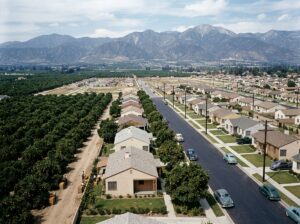
After World War II, suburban development transformed much of the San Gabriel Valley. Orchards gave way to housing, streets, shopping areas, schools, and other urban uses. Covina’s downtown no longer served a predominantly agricultural landscape.
As automobile ownership grew, commercial development also expanded beyond the traditional core. Newer shopping centers were often designed around vehicle access and parking rather than the compact pedestrian pattern found along older downtown streets.
This did not eliminate the historic center, but it changed its role. Citrus Avenue increasingly became one destination among many rather than the only obvious center of local activity.
Historic Character Became a Planning Priority
Today, Covina’s planning documents treat the Citrus Avenue District as a place whose historic identity should remain visible even as the area evolves. The current Covina Town Center Specific Plan identifies the district as the city’s historic downtown and central core.
The plan prioritizes preservation and enhancement of historic character while encouraging visitor-friendly retail, services, mixed uses, public spaces, and stronger connections with the Metrolink station. It describes the desired character as a historic, walkable downtown where people can park once and visit multiple destinations on foot.
This approach recognizes that preservation is not the same as preventing all change. Historic districts need active businesses, useful buildings, safe sidewalks, accessible public spaces, and reasons for people to spend time there.
Heritage Plaza Keeps Downtown Social
Heritage Plaza Park at 400 N. Citrus Avenue shows how modern downtown life can support the historic corridor. City information lists a stage, historical walk, play equipment, picnic facilities, and the Friday farmers market among the park’s amenities.
These uses reinforce downtown as a community gathering place rather than only a commercial street.
Historic Records Make Then-and-Now Comparisons Possible
Understanding what has changed requires more than memory. Photographs, maps, surveys, documents, and preserved artifacts provide evidence of earlier streetscapes and buildings.
The City’s planning resources include a 2007 Covina Town Center Historic Resource Survey. The Planning Division resource library makes the survey available alongside current planning documents.
The Covina Valley Historical Society also preserves photographs, documents, citrus records, scrapbooks, artifacts, and materials connected with early community life. Collections like these make it possible to compare familiar streets with earlier periods and see changes that may no longer be obvious from the buildings alone.
What Has Changed and What Has Stayed
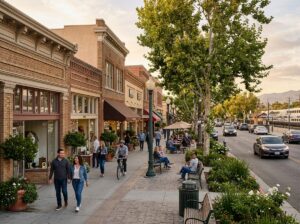
The biggest change is the world surrounding Citrus Avenue. The agricultural landscape that once supported Covina’s citrus economy has largely been replaced by suburban development. Transportation has shifted from agricultural shipping and local travel toward highways, automobiles, buses, commuter rail, walking, and other modern mobility choices.
Commercial uses have changed as well. Businesses that served growers and early residents have been replaced over generations by restaurants, entertainment, professional services, retail, and other uses suited to today’s population.
What has remained is the importance of the central corridor itself. Citrus Avenue is still treated as a distinct place rather than simply another road. Its older buildings, compact blocks, public spaces, civic destinations, and relationship with nearby transportation continue to set it apart.
Downtown Covina Is Still Writing Its History
A then-and-now comparison can make history look like a finished story, but Downtown Covina is still changing. New uses will occupy older buildings. Public spaces will be updated. Transportation needs will evolve, and planning decisions will continue shaping how the district looks and functions.
The value of studying Citrus Avenue is that these changes can be understood as part of a longer timeline. The citrus era, railroad growth, postwar suburbanization, preservation efforts, and current interest in walkability are connected chapters in the development of the same place.
For readers exploring Covina History, Downtown Covina offers one of the clearest examples of how a community can change dramatically while keeping visible reminders of where it came from.